Your Partner in Process Excellence

Understanding CMMI High Maturity Practices
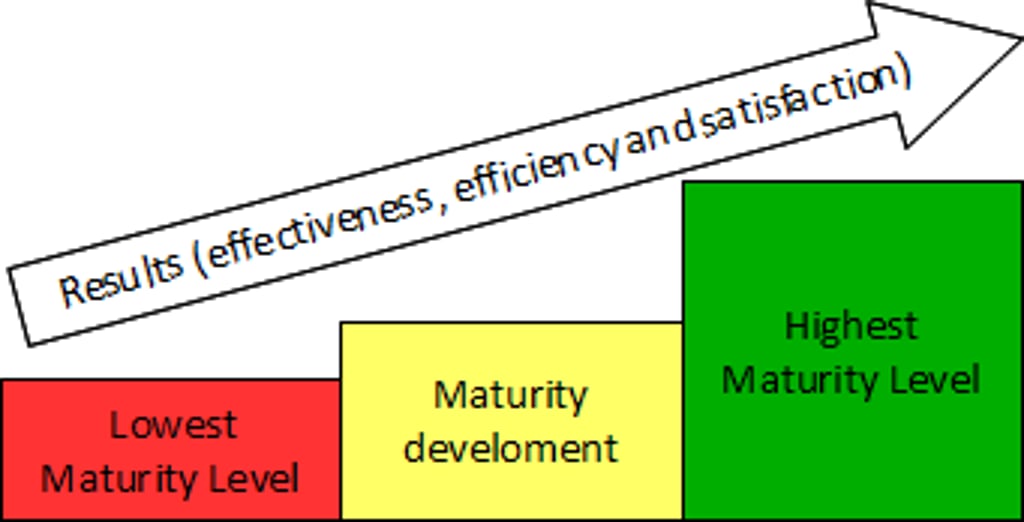
Maturity Levels 4 and 5 focus on quantitative management and continuous process optimization—enabling businesses to make data-driven decisions aligned with their objectives. CMMI High Maturity is not just about achieving Level 4 or 5—it’s about transforming the organization into a data-driven, performance-optimized system. At high maturity, processes are no longer just defined—they are measured, controlled, and continuously improved to directly support business goals.
CMMI
2/3/20262 min read
Understanding CMMI High Maturity Practices
Achieving high maturity in CMMI (Capability Maturity Model Integration) is a strategic milestone for organizations aiming to move from reactive management to predictive and optimized performance. Maturity Levels 4 and 5 focus on quantitative management and continuous process optimization—enabling businesses to make data-driven decisions aligned with their objectives.
Aligning High Maturity Practices with Business Objectives
At high maturity, processes are no longer just defined—they are measured, controlled, and continuously improved to directly support business goals.
Organizations can:
Link process performance metrics to strategic objectives
Use statistical techniques to predict outcomes
Improve cost efficiency, quality, and delivery timelines
Make proactive decisions based on data rather than intuition
This ensures that process improvement initiatives are not isolated activities but business-driven transformations.
Interpreting Level 4 and Level 5 Practices Effectively
Maturity Level 4 – Quantitatively Managed
Focuses on:
Establishing process performance baselines (PPBs)
Using statistical and quantitative techniques
Managing variation in process performance
Maturity Level 5 – Optimizing
Focuses on:
Continuous process improvement
Root cause analysis and defect prevention
Innovation and optimization through data insights
A consistent interpretation of these practices helps organizations:
Avoid subjective assessments
Maintain standardization across projects
Ensure reliable and repeatable performance outcomes
Applying High Maturity Concepts: PPBs and PPMs
Two critical pillars of high maturity are:
1. Process Performance Baselines (PPBs)
Represent historical performance data
Establish expected ranges for process metrics
Serve as a benchmark for future performance
2. Process Performance Models (PPMs)
Use statistical models to predict outcomes
Identify relationships between process variables and results
Support scenario analysis and decision-making
Together, PPBs and PPMs enable organizations to shift from:
➡ Reactive management → Predictive and proactive control
Integrating CMMI, TSP, and Six Sigma
High-performing organizations often combine multiple frameworks for maximum impact:
CMMI
Provides the overall maturity framework
Focuses on process improvement and capability development
TSP (Team Software Process)
Ensures disciplined team-level execution
Emphasizes planning, tracking, and quality ownership
Six Sigma
Drives data-driven problem solving
Uses DMAIC (Define, Measure, Analyze, Improve, Control) methodology
How They Work Together
CMMI defines what needs to be achieved
TSP ensures how teams execute effectively
Six Sigma provides analytical tools for improvement
This integrated approach enables:
Better quality control
Reduced defects and variability
Stronger alignment between strategy and execution
Final Thoughts
CMMI High Maturity is not just about achieving Level 4 or 5—it’s about transforming the organization into a data-driven, performance-optimized system.
Organizations that successfully adopt high maturity practices:
Predict outcomes with confidence
Continuously improve processes
Align operations with strategic business goals
Contact
Ready to boost your maturity? Reach out.
Phone
© 2026. All rights reserved.
linked in